
"My treatment made it noticeably easier to fit into clothes comfortably. The team explained everything clearly beforehand, and the aftercare instructions were precise and easy to follow."
Non-Surgical Body Contouring & Fat Reduction — UK
Non-Surgical Body Contouring & Fat Reduction — UK
We offer carefully assessed, non-surgical body-contouring and fat-reduction treatments guided by clinical rigour and individualised care. Our approach begins with listening understanding your goals, explaining your options in plain terms, and building a plan designed around you.
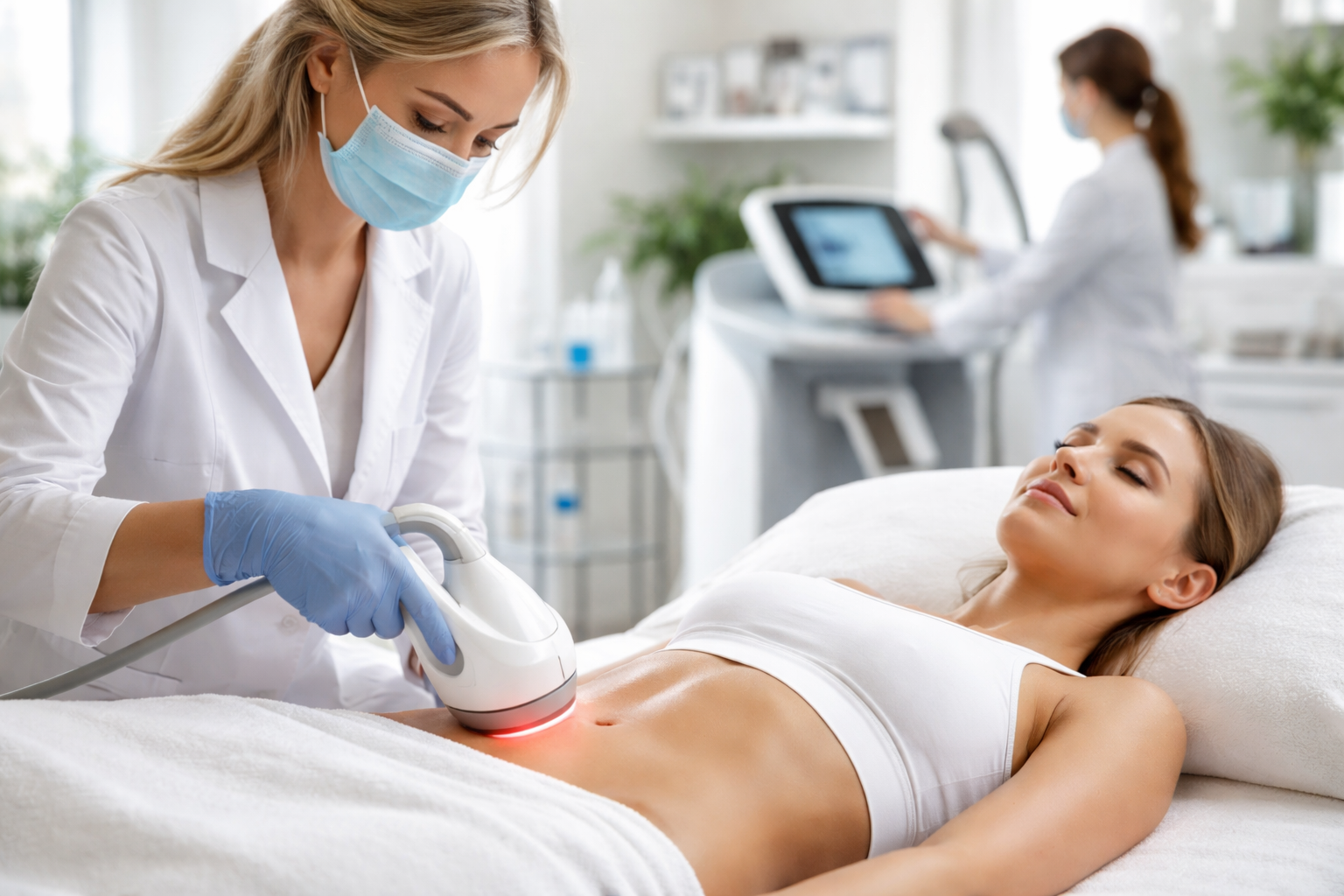
We are a London-based aesthetic clinic providing advanced non-surgical body-contouring and fat-reduction treatments. Our philosophy is that aesthetic care should be delivered with genuine medical responsibility, respect for individual objectives, and absolute transparency about what is — and what is not — achievable.
Good outcomes begin with good conversations. We carry out a careful assessment, communicate the options honestly, and build a care plan specifically designed for you. That means listening closely, explaining the science in language everyone can understand, and helping you weigh probable benefits against the realities of recovery, cost and long-term expectations.
We do not sell quick fixes. Every recommendation is grounded in safety and based on what is genuinely achievable for your anatomy, health history and goals. The first step is always a consultation because no two people are the same.
"Aesthetic care should belong to the individual who decides to pursue it — not to a sales script. We are committed to respectful, evidence-focused care with clear information, honest expectations and supportive aftercare."
Stringent clinical protocols, informed consent and documented aftercare underpin every treatment we provide.
We listen before we recommend. Your anatomy, health and goals determine the plan — not a pre-packaged service menu.
We explain probable outcomes, realistic timelines and the full range of possible side effects before any decision is made.
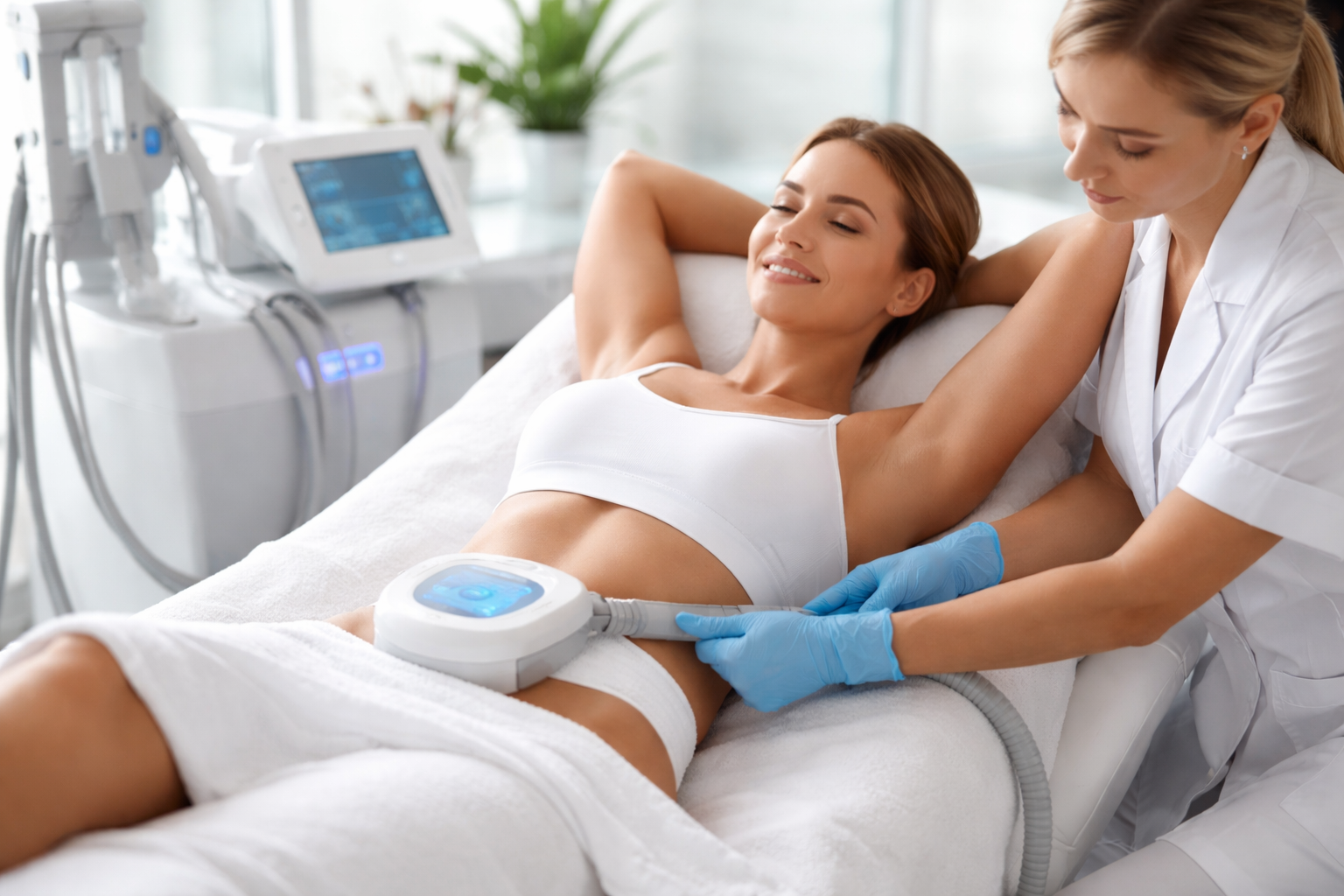
Non-surgical body-contouring procedures apply controlled energy or targeted techniques to reduce localised fat deposits and improve contours. When performed by trained, regulated clinicians in a governed clinical setting, they can be effective, safe and well-tolerated. The difference between outcomes achieved in professional clinical environments and those offered in unregulated settings is significant.
Treatments are carried out only by appropriately trained practitioners holding current professional registration. Continuing professional development is a standard, not an option.
A professional consultation evaluates your medical history, suitability for treatment and individual anatomy — information that is essential for safe, effective care and that no self-administered or pop-up treatment can replicate.
Standardised packages rarely match individual presentations. A clinically designed plan accounts for your specific anatomy, health considerations and goals — adjusting as your treatment progresses.
Clinical follow-up allows progress to be measured objectively, treatment to be adjusted if necessary, and results to be interpreted accurately — distinguishing genuine improvement from normal biological variation.
A professional clinical environment is one where overpromising is refused on principle. Informed consent, honest discussion of limitations and candid conversations about alternatives are non-negotiable standards of care.
Documented protocols, adverse event monitoring and formal follow-up pathways mean that concerns — if any arise — are identified and addressed promptly and professionally.

Non-surgical body-contouring treatments work by applying controlled energy such as targeted cooling, heat, ultrasound or radiofrequency to specific areas of the body. This energy targets and disrupts fat cells in localised deposits without making incisions. The body then naturally processes and eliminates the affected cells over a period of weeks to months.
Unlike surgical liposuction, these procedures do not require general anaesthesia and generally involve minimal to no downtime. Sessions are typically conducted in a clinical setting with the patient awake and comfortable throughout. Most people resume normal activities promptly after treatment.
The specific mechanism, session duration, expected sensation and timeframe for results differ between techniques and between individuals. Your clinician will explain the precise process for the treatment recommended for you before any decisions are made.
It is important to understand that these are not weight-loss treatments. They are designed for localised fat reduction and contour improvement, and work best when combined with a broadly healthy lifestyle.
A thorough consultation reviews your medical history, lifestyle, treatment area and aesthetic goals. Appropriate candidates are identified and unsuitable treatments are excluded.
A device is positioned against the skin in the treatment area. Controlled energy — depending on the technique — is delivered to the targeted tissue beneath the surface.
Affected fat cells undergo a natural process of damage and programmed cell death. They do not rupture acutely — the change occurs gradually over the coming weeks.
The body's lymphatic and metabolic systems process and clear the treated cells over a period of weeks to months, progressively reducing the volume of the treated area.
Contour improvement becomes visible gradually. Final results typically develop over six to twelve weeks, with further improvement possible after additional sessions where indicated.
Non-surgical body-contouring treatments are appropriate for a specific profile of individuals. The consultation is the most important step in determining suitability — and not everyone will be an appropriate candidate. Honest assessment protects both patient safety and outcome quality.
Individuals with small to moderate pockets of stubborn, localised fat that have not responded satisfactorily to diet and regular exercise are typical candidates. These treatments are not designed for general weight loss.
Those seeking alternatives to surgical body contouring who wish to avoid general anaesthesia, significant downtime, or the risks associated with surgical intervention may find non-surgical approaches well-suited to their needs.
Candidates who understand that results develop gradually, may require multiple sessions, and represent incremental rather than dramatic change are more likely to experience satisfaction with the outcome.
Individuals in broadly good health, without significant contra-indicated medical conditions and within a broadly healthy weight range for their height are generally better candidates for these treatments.
Those using treatment as a complement to an existing or developing healthy lifestyle — not as a substitute for one — typically achieve the most durable results.
Particular presentations — such as submental fullness, upper arm definition, abdominal contour and flank definition — may be amenable to non-surgical approaches depending on individual anatomy and skin quality.
Treatment is not appropriate in all circumstances. Certain medical conditions, current pregnancy or breastfeeding, and some medications represent contra-indications that are reviewed in every consultation. If a surgical approach or referral to another specialist would serve you better, we will say so openly and assist with an appropriate referral.
The following describes the categories of concerns that non-surgical body-contouring treatments are commonly used to address. Individual suitability and the specific approach will always be determined at consultation.
Small pockets of fat concentrated in specific anatomical areas — such as the abdomen, flanks, inner thighs or under the chin — that persist despite weight management efforts. These localised deposits are the primary target for non-surgical fat-reduction techniques. Results develop gradually over several weeks and typically represent a subtle but meaningful improvement in contour.
Mild to moderate fullness under the chin or along the jawline can significantly affect perceived facial balance and profile. Several non-surgical options exist for reducing submental fat and improving definition in this area. Suitability depends on the degree of fat present and the quality of overlying skin, both of which are assessed at consultation.
Areas where the natural surface of the body appears uneven or inconsistent in shape — sometimes arising naturally, sometimes following weight changes — may benefit from targeted contouring treatments. The goal is smoother, more uniform contours rather than a significant reduction in overall volume.
Cellulite — characterised by dimpled or uneven skin texture, most commonly affecting the thighs, buttocks and abdomen — is a distinct concern from localised fat. Treatments targeting cellulite work through mechanical or energy-based mechanisms to improve the appearance of skin texture. Multiple sessions and maintenance are typically required; results vary between individuals.
Mild looseness or loss of firmness in the skin — often associated with age, weight fluctuation or post-pregnancy changes — can sometimes be addressed through energy-based treatments that stimulate collagen production and tissue remodelling. The degree of improvement achievable depends on the extent of laxity and individual tissue characteristics.
Individuals who have achieved significant weight loss through diet, exercise or medical intervention sometimes have residual areas of localised fat that are disproportionately resistant to further reduction. Non-surgical treatments may assist in refining contours once weight has been broadly stabilised. A stable weight is an important pre-condition for treatment in this context.
Non-surgical fat-reduction and body-contouring treatments produce genuine, measurable improvements in contour for appropriately selected individuals. However, setting accurate expectations is as important to us as the treatment itself. The following gives an honest overview of what is and is not typically achievable.
Improvement from most non-surgical procedures develops over weeks to months as the body metabolises treated fat cells. Do not expect an immediate dramatic change. The full effect often becomes most visible six to twelve weeks after the final session.
Some individuals achieve their desired outcome in a single session. Others require a planned course of treatments spaced over several weeks. The number of sessions needed will be estimated at consultation and reviewed during follow-up, based on your individual response.
Individual biology, baseline body composition, skin quality, age and adherence to aftercare all influence outcomes. We will discuss the realistic range of outcomes for your specific presentation — not the best-case scenario from a promotional brochure.
"Honest expectations are the foundation of a satisfying outcome. We would rather undersell what is achievable and exceed it than promise transformation and deliver modest improvement."

Your safety underpins every aspect of the care we provide. Clinical governance is not a box-ticking exercise it is a continuous standard that informs how we train, how we treat and how we respond when things need attention.
All procedures are performed by clinicians holding appropriate professional qualifications and current registration. Ongoing training in both technique and safety is a standard requirement. Clinician names, qualifications and registration details will be added to this page upon confirmation.
Written protocols govern patient screening, pre-treatment consent, infection control and emergency response. All treatments are performed in an appropriate clinical environment with documented procedures and clear aftercare pathways.
Only devices and equipment that adhere to applicable safety standards are used. Device names, manufacturers and regulatory approvals will be confirmed and published after client verification.
Before any treatment begins, you will receive a clear, written explanation of anticipated benefits, expected recovery, and possible complications. Questions are welcomed and expected. Consent is fully informed and freely given — never assumed.
We track outcomes and document adverse events. This data informs ongoing improvements to care quality. Post-treatment concerns are addressed through structured follow-up pathways, not left to the patient to manage alone.
We treat safety as non-negotiable. That means clear pre-treatment screening, stringent hygiene protocols, proper infection control and emergency preparedness. It also means being honest when a treatment is not appropriate — and being willing to refer on when another specialist or a surgical approach would serve you better.
Our clinicians practice within their competencies, maintain up-to-date training, and adhere to evidence-based guidelines. We do not adopt treatments or devices without proper training, regulatory compliance and documented clinical rationale.
Accreditation details, professional registration numbers and device approvals will be listed here in full once confirmed: [Accreditation body name] [Regulatory body registration] [Device approvals]
Treatments are clinical procedures. Suitability is determined at individual consultation. Individual results vary. Complications can occur — your clinician will discuss risks specific to the procedure recommended for you.

Structured aftercare is an integral part of the treatment process not an afterthought. Clear, written aftercare instructions are provided after every procedure, and follow-up appointments are routinely scheduled so that your progress can be monitored and any questions addressed promptly.
You will receive specific written instructions covering what to expect in the hours and days immediately following your procedure. This includes guidance on managing any temporary redness, swelling, tenderness or numbness in the treated area, and advice on activity and rest.
We clearly explain which post-treatment signs and symptoms are expected and normal, and which would prompt an earlier review. You will know precisely what to look out for and how to reach the clinic if something requires attention before your scheduled follow-up.
A follow-up appointment is arranged for every patient. This is used to assess healing, evaluate early results, discuss any concerns and determine whether further treatment sessions are indicated. Progress is documented consistently so that your response can be tracked objectively.
Results are best maintained when treatment is integrated with a stable, healthy lifestyle. We provide practical guidance on nutrition, hydration, physical activity and the role of weight stability in preserving contouring outcomes over the longer term.
Where maintenance treatments are clinically indicated — to preserve or extend initial results — these will be discussed honestly at follow-up, with a clear rationale for each recommendation. Maintenance is never suggested as a default; it is proposed when there is a genuine clinical reason to do so.
Your clinical records — including any pre- and post-treatment photographs, consent documentation and treatment notes — are managed in accordance with data protection obligations and with full respect for your privacy and dignity.
The only reliable way to determine suitability is through a clinical consultation. We will review your medical history, assess the quality of the skin in the area of concern, and evaluate the nature and extent of the fat deposit. Non-surgical options are generally appropriate for small to moderate, localised fat pockets rather than significant overall weight loss. Some presentations are better suited to surgical approaches, and we will tell you so clearly if that is our clinical view.
No — these are not weight-loss procedures. They are designed to reduce and reshape small, localised areas of fat in order to improve body contour. If your primary goal is significant weight reduction, we will discuss appropriate dietary, lifestyle and clinical referral options rather than offer a body-contouring treatment that would not meet your objective.
Results are gradual and depend on the treatment used and the individual's physiology. Some procedures produce a slight early change, but the full outcome typically becomes apparent over six to twelve weeks as the body naturally processes treated tissue. In some cases, results continue to develop for longer. We will give you a realistic expectation of the timeframe relevant to your specific treatment plan.
Most non-surgical treatments are well-tolerated. Depending on the technique, you may experience sensations of warmth, cooling, mild pressure or brief stinging during the session. Where minimally invasive options are used, local anaesthesia is applied to manage discomfort. We will explain precisely what to expect from the specific treatment recommended for you, and comfort measures will be discussed before any procedure begins.
The most commonly reported side effects are temporary and localised: redness, swelling, bruising, tenderness or numbness in the treated area. These typically resolve within days to a few weeks. Serious complications are rare but possible, and we will explain them fully during the consent process. You will be given clear guidance on which post-treatment changes are expected, and which would warrant an earlier review appointment.
This depends on the treatment, the area being treated, the volume of fat present and your individual response. Some patients achieve a satisfactory outcome after a single session; others require a planned course of two to four sessions or more. At consultation, we will provide a realistic estimate and review your progress at each follow-up appointment. We do not recommend additional sessions unless there is a clear clinical rationale.
The fat cells targeted by these treatments are reduced in a lasting way. However, remaining fat cells can expand, and new fat accumulation can occur with weight gain. This means that while the treated cells themselves are permanently affected, overall body composition remains subject to the normal effects of weight change and ageing. Long-term maintenance of results is therefore linked to weight stability and a healthy lifestyle. We will never promise permanent or guaranteed outcomes — that would be clinically dishonest.
For most non-surgical treatments, downtime is minimal and many people return to work the same day. Minimally invasive procedures may require a short recovery period of one to several days, depending on the technique and the individual. You will be given detailed and accurate information about expected downtime for the specific treatment recommended for you, so you can plan accordingly.
Please share your full medical history, current and recent medications, supplements, and any history of previous aesthetic procedures. For facial treatments, a history of cold sores is relevant. It is equally important to bring your genuine expectations and any concerns you have — the consultation is a two-way conversation, and the quality of the information you provide directly influences the safety and appropriateness of the treatment plan we design.
Yes. Treatment is not appropriate in some circumstances — including certain medical conditions, during pregnancy or breastfeeding, or with some medications. Specific contra-indications depend on the treatment in question and are reviewed systematically at every consultation. If you are not suitable for treatment, we will tell you clearly and, where possible, suggest an appropriate alternative or referral pathway.
Aftercare instructions include clear guidance on how to recognise concerns and how to contact the clinic. A follow-up appointment is always scheduled. If something requires attention before that point, we have pathways in place to respond promptly. We take post-treatment feedback and concerns seriously, and they are handled by the clinical team, not administrative staff alone. Specific contact channels will be confirmed and published on this page once provided by the clinic.
We do not publish treatment costs here. Pricing is discussed in full at consultation because the appropriate treatment, the number of sessions required and any supportive therapies vary considerably between individuals. You will receive a clear, itemised indication of cost as part of your treatment plan — before any commitment is made — so that you can make an informed decision at your own pace.
The following are representative patient perspectives. Real, consented testimonials with verified patient approval will replace these placeholders prior to publication. All testimonials must be anonymised as appropriate and dated.
"My treatment made it noticeably easier to fit into clothes comfortably. The team explained everything clearly beforehand, and the aftercare instructions were precise and easy to follow."
"I appreciated the frank consultation most. The results emerged gradually, precisely as I had been told they would, and recovery was straightforward. I felt properly informed throughout."
"The staff created a calm, professional environment from the first appointment. I felt genuinely listened to, and the follow-up after treatment was thorough and reassuring."
"I was genuinely cautious about anything non-surgical. The clinician recommended a conservative approach and was direct about what to expect. The result was subtle and natural — which is exactly what I wanted."
Testimonials above are placeholders. Replace with actual, consented patient testimonials before publication. Anonymise and date in accordance with your privacy policy. Do not include testimonials that imply guaranteed results.

These are the principles that shape every clinical interaction — from the initial enquiry through to long-term follow-up. They are not aspirational statements; they are practical standards.
All clinicians are qualified and regulated within their respective specialties and participate in regular continuing professional development in both technique and safety. Clinician names, qualifications and professional registration details will be added to this page upon confirmation from the clinic.
Safety is not one consideration among many — it is the foundation. That means rigorous pre-treatment screening, stringent hygiene and infection-control protocols, emergency preparedness, and documented aftercare. We describe both the benefits and the possible complications of every treatment in plain language, and we never pressure patients into procedures they have reservations about.
Every person presents differently. We do not offer pre-packaged treatment bundles. Instead, we design individualised plans based on your anatomy, health history and specific goals. Recommendations are made on clinical grounds — not on what generates the most revenue.
You will receive clear guidance on what to expect: typical outcomes, the probable recovery trajectory, and the realistic range of side effects or complications for your specific treatment. We emphasise shared decision-making, which means your values and preferences guide the plan — not a prescribed pathway. Informed consent is taken before any treatment, never before the consultation.
Written aftercare instructions and a scheduled follow-up are standard for every patient — not optional extras. Follow-up appointments allow progress to be tracked, questions to be addressed and further treatment to be considered where genuinely indicated. We are here after the procedure as well as during it.
All consultations and treatments take place in private clinical rooms. Patient records are handled in full accordance with data protection obligations. Every patient is treated with sensitivity and respect, regardless of the nature or extent of the concern they have come to us with.
We follow a careful risk-benefit model. If a surgical approach or referral to another specialist would provide a safer or more effective outcome for your situation, we will say so clearly and assist you in accessing that care. We do not attempt to fit an inappropriate treatment to a presentation simply to keep the work in-house.
We make no promises we cannot keep. Instead, we focus on incremental, realistic improvements and ensure you understand both the scale of change achievable and the timeline in which it is likely to become apparent. This approach sometimes means declining to take on patients we feel we cannot genuinely help — and that is the correct clinical decision.

Understanding the full treatment journey before making any decisions is central to informed, confident care. The following describes what happens at each stage — from initial enquiry through to long-term follow-up.
Your journey starts with a question. Enquiries are handled by the clinic team, who will explain what a consultation involves and help arrange an appointment. No treatment commitments are made at this stage.
A comprehensive appointment covering your medical history, goals, suitability assessment and a frank discussion of treatment options, realistic outcomes, recovery and costs. You are encouraged to ask all your questions here.
If treatment is suitable, an individual plan is prepared: recommended treatment or combination, number of sessions, spacing, expected recovery, and any preparatory measures. Informed consent is obtained once all questions are answered.
Treatments range from non-invasive sessions under an hour to minimally invasive procedures with local anaesthesia. Your clinician will explain comfort measures, expected sensations and the immediate post-treatment experience in full.
Written aftercare instructions are provided for all patients. These cover activity guidance, symptom management, signs that warrant an earlier review, and how to contact the clinic with any concerns.
A review appointment is scheduled for all patients. Progress is assessed, results are evaluated and any further sessions or maintenance recommendations are discussed — with honest rationale provided for each suggestion.
From your first enquiry through to long-term follow-up, our commitment is to transparent, respectful and evidence-informed care. Your comfort, privacy and safety guide every clinical decision we make. If your needs would be better served elsewhere, we will tell you honestly and help you access the right care. We appreciate you considering this clinic, and we support fully-informed decision-making above all else.